Solar battery vs EV V2H: which backup setup makes more sense at home
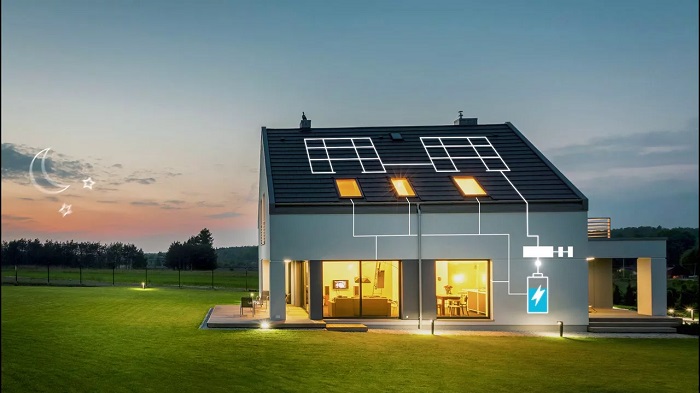
An electric vehicle can hold far more energy than many home batteries. That fact makes a tempting question almost unavoidable: why buy a stationary battery if an EV can power the house?
The answer is not as simple as battery size.
The Difference Between V2H and a Home Battery
V2H, or vehicle-to-home, allows a compatible electric vehicle to send electricity back into a home through bidirectional charging equipment. V2G, or vehicle-to-grid, goes a step further and allows power to flow back to the grid when permitted by utility programs.
A home battery, by contrast, is stationary. It sits at the property, charges from solar or the grid, and supports the home when needed.
Both can provide backup. They just behave differently in daily life.
When an EV Makes Sense as Backup
An EV with V2H can be attractive because the battery is already large. For a homeowner who drives modest miles and parks at home during high-risk outage periods, V2H can provide meaningful resilience.
The International Energy Agency’s 2026 work on vehicle-to-grid technology notes that bidirectional charging can help reduce peak demand and support grid services where market rules allow it. That matters because EVs are becoming part of the energy system, not just transportation.
Still, the car has to be there. If the vehicle is at work, at an airport, or low on charge when a storm hits, the backup plan may not work as expected.
Why Stationary Batteries Still Matter
A stationary battery is always connected to the home. It can charge from rooftop solar during the day, discharge during evening peak rates, and remain available even when the EV is away.
For solar homes, that consistency matters. A solar battery can increase self-consumption by storing excess daytime production. It can also keep critical loads running without depending on driving schedules.
Systems that combine storage and EV charging are becoming more relevant. ESYsunhome’s residential energy page includes solar storage and EV charging scenarios, while the EV22 V2E is listed as a 22 kW unit that is V2H/V2G ready. For households planning both solar and an EV, a solar storage and EV charging system can be easier to think through as one energy plan instead of two separate purchases.
The Best Setup May Use Both
For some homes, the strongest design is not battery versus EV. It is battery plus EV.
A stationary battery can handle everyday solar shifting and short outages. An EV can add backup depth when parked and sufficiently charged. Smart controls can decide when to charge, when to discharge, and how much reserve to keep.
That kind of setup is especially useful in homes with time-of-use rates. The stationary battery can reduce evening grid purchases, while the EV charges when rates are lower or solar output is strong.
Questions to Ask Before Choosing
A homeowner comparing V2H and stationary storage should ask:
- Is the EV compatible with bidirectional charging?
- Is V2H supported by local codes and utility rules?
- Is the vehicle usually home during outage-prone hours?
- Will rooftop solar recharge the system?
- Are critical loads separated or managed?
The answers usually reveal whether V2H is the main backup source, a supplement, or a future upgrade.
EV backup is promising, but it is not a universal replacement for home storage. The better choice depends on parking habits, outage risk, solar production, and how much control the household wants over its energy.